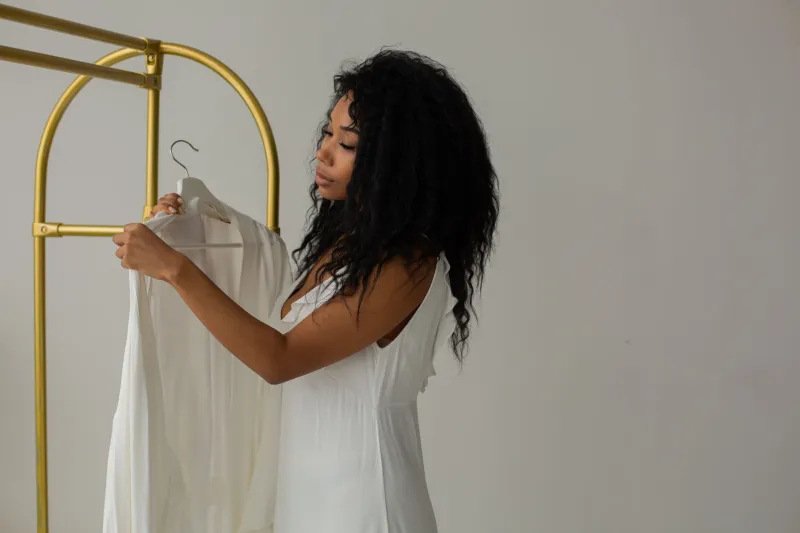
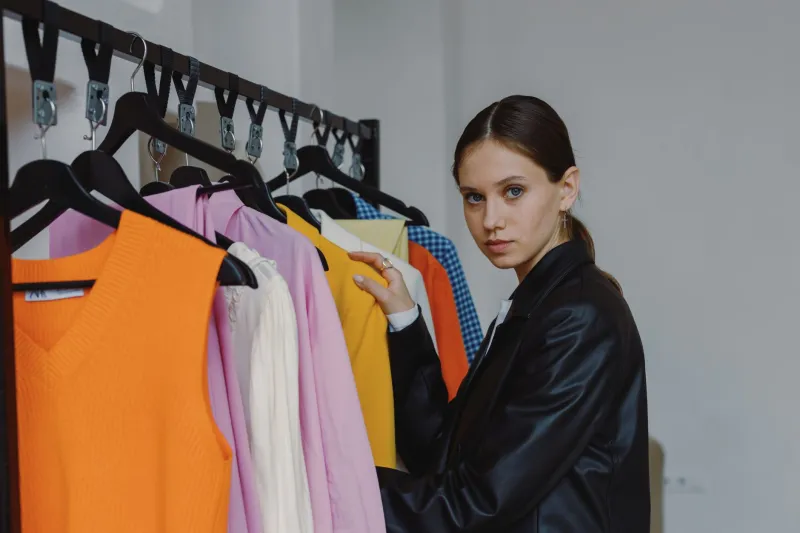
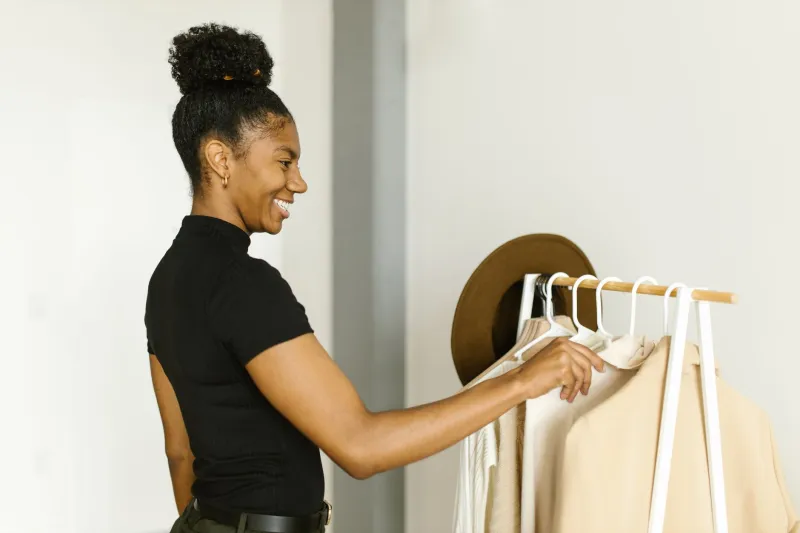
Digging Through Decades: How Thrift Shopping Turned Into a Competitive Sport With Homework
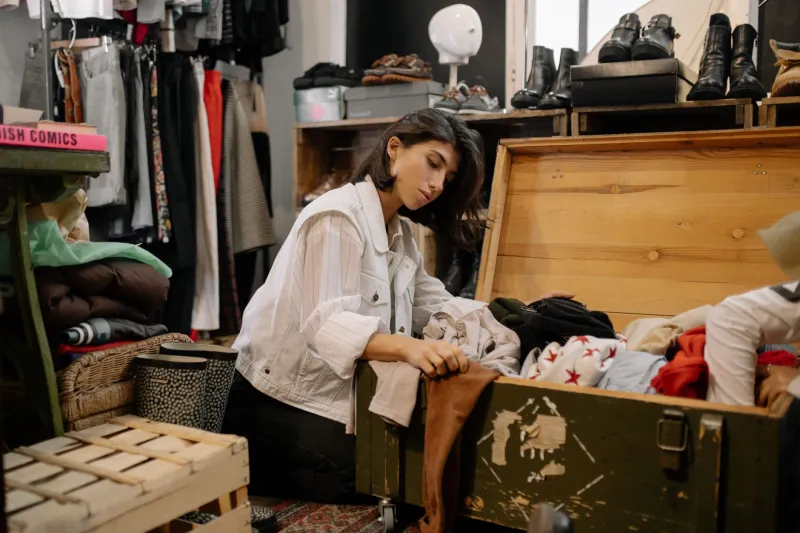
There was a time, not all that long ago, when thrift shopping meant wandering into a Goodwill with no particular expectations, flipping through a rack of someone else's retired cardigans, and leaving with a lamp and a slight sense of melancholy. It was unpretentious. It was a little sad in the best way. It cost you six dollars.
That time is over.
Thrifting in 2024 is a fully professionalized hobby with its own vocabulary, its own influencer class, its own gatekeeping hierarchies, and its own ability to make you feel deeply inadequate for buying something at full retail price. What used to be a practical solution for people on tight budgets has become — and there's no diplomatic way to say this — a personality.
The Accidental Fashion Archaeologist
At the center of this cultural shift is the Thrift Archaeologist: a person who has decided that secondhand shopping is not a transaction but an excavation. These are people who handle a rack of blouses the way a geologist handles a rock formation. They date garments by their tags. They know which department store labels from the 1990s are worth something. They will hold a blazer up to the fluorescent light and assess the quality of its lining with the seriousness of someone who has studied for this.
To be clear: nobody issued these people a license. There was no coursework. There is no governing body for vintage authentication. And yet they walk through Salvation Army with the quiet confidence of someone who absolutely knows things you don't, and the worst part is — they often do.
The knowledge is real. The expertise is earned through thousands of hours of digging. The costume, however? That's a choice.
TikTok Turned the Thrift Store Into a Battleground
If you want to understand why your local Goodwill now has a dedicated "Vintage" section where a pair of corduroy flares costs $28, look no further than TikTok.
The Thrift Flip video — where someone buys a sad garment and transforms it into something cool — became one of the platform's dominant fashion formats. It looked easy. It looked fun. It looked like a creative life hack. What it actually did was send millions of people directly to their nearest thrift store with completely recalibrated expectations.
Suddenly, the racks that used to be picked over slowly by regulars were being cleared out by people on a mission. Resellers appeared, buying anything remotely vintage and flipping it on Depop for three to five times what they paid. The stores themselves noticed the demand and started pricing accordingly. The $3 flannel shirt became a $14 "vintage flannel." The old Levi's that used to be a steal are now priced like they know what they are.
The thrift store democratization project accidentally created a new luxury market — just one that smells like cedar and old paperbacks.
The Myth of the Hidden Gem
Every thrift devotee has a story. The designer blazer they found for $4. The perfect vintage Levi's in exactly their size. The deadstock sneakers still in the original box, somehow, inexplicably, in a bin in rural Ohio.
These stories are real. They happen. They also happen about as often as finding a $20 bill in an old coat pocket, and yet they have become the founding mythology of an entire subculture.
The hidden gem narrative is powerful because it reframes the entire shopping experience as a potential lottery win. You're not just buying clothes — you're on a quest. Every rack is a puzzle. Every visit could be the one where you find the thing that makes your entire wardrobe suddenly make sense.
This is also, if we're being honest, an extremely effective way to spend four hours in a thrift store and walk out with twelve things you didn't need because you were afraid to leave empty-handed after all that effort.
The sunk cost fallacy has never looked so charming.
The $40 Sweater and What It Actually Means
Let's address the elephant in the vintage section. Paying $40 for a thirty-year-old acrylic sweater at a curated thrift shop is not the same as thrifting. It is antique shopping with better branding.
And yet, the distinction has become almost impossible to maintain in public without sounding insufferable. Because the person paying $40 for that sweater has a whole narrative about it — the era it came from, the way it fits differently than modern cuts, the fact that buying secondhand is better for the environment — and all of those things might be completely true while also being a very sophisticated justification for spending $40 on a sweater that has already been worn by a stranger.
This is the thrifting paradox: a hobby that started as an alternative to expensive fashion has, in many of its current forms, become just as expensive as the system it was supposed to subvert. The prices have followed the cultural cachet. The aesthetic is now a product. And somewhere, a fast fashion brand is already selling a new $35 shirt that's been artificially distressed to look like it came from a bin in 1994.
The Gatekeeping Is Exhausting and Also Extremely Online
If you've ever posted a thrift haul on social media, you already know that the comments section is a minefield. Did you buy too much? Are you a reseller driving up prices? Did you correctly identify that item as vintage, or are you misusing the term? Was that piece actually from the era you claimed, or are you off by a decade?
Thrift gatekeeping has become its own genre of online discourse, complete with designated experts who will appear in your mentions to explain why you're doing it wrong. The arguments are passionate. The stakes feel oddly high for a conversation about used clothing.
Under all of it is a genuine tension: thrift stores used to serve people who needed affordable clothing options, and the mainstreaming of thrift culture has, in some markets, made that harder. That's a real issue worth taking seriously. It's also being discussed primarily by people who are filming their hauls for content, which adds a certain irony to the whole thing.
Finding Your Own Relationship With the Rack
None of this means thrifting isn't worth doing. It absolutely is. The environmental case for buying secondhand is solid. The financial case is still valid if you're shopping at actual thrift prices and not curated vintage boutique prices. And the genuine thrill of finding something unexpected — something with history, with texture, with a story you'll never fully know — is real and lovely and worth chasing.
You just don't have to make it a whole thing.
You don't need to authenticate the denim. You don't need to post the haul. You don't need to become a fashion archaeologist with a specialty in late-period Gap flannel. You can just go to the store, flip through the racks, buy the things that make you happy, and leave.
The hidden gem, it turns out, is not requiring the experience to be more than it is.