Forty-Seven Pieces of Clothing and Not a Single Thing to Wear
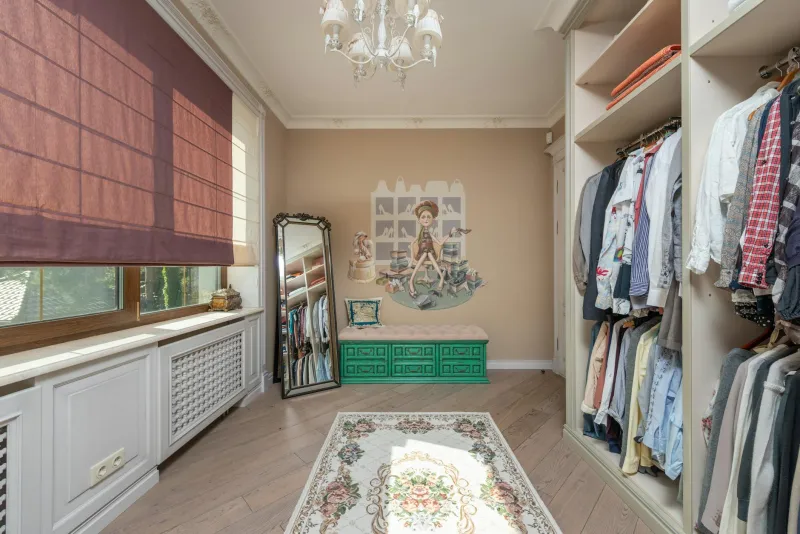
Forty-Seven Pieces of Clothing and Not a Single Thing to Wear
Let's set the scene. It's 7:43 a.m. You have somewhere to be by 8:30. You open your closet — a space so dense with fabric that a small ecosystem could survive inside it — and you stand there, motionless, blinking slowly, before declaring with total sincerity: I have absolutely nothing to wear.
This is not a you problem. This is an American problem. A deeply, beautifully, embarrassingly American problem. And it's time we talked about it.
The Numbers Don't Lie (But They Do Embarrass Us)
The average American owns somewhere between 77 and 120 pieces of clothing, depending on which study you believe and how aggressively you're counting the pile on the chair. That is, by any reasonable measure, a lot of clothing. Enough to dress yourself, a neighbor, and at least one medium-sized golden retriever. And yet, research consistently shows that most people regularly wear only about 20 percent of what they own.
Do the math. If you own 80 items, you're living out of 16 of them. The other 64 are just… hanging there. Watching. Waiting. Silently judging you every time you reach past them for the same gray crewneck you've worn four times this week.
So how did we get here? How does a nation of otherwise functional adults end up drowning in textiles while simultaneously convinced they need to hit the sale tab before it refreshes?
The Aspirational Purchase: A Love Story With a Sad Ending
Every overstuffed closet has its ghosts. You know the ones. The wide-leg trousers you bought because you were absolutely going to become a wide-leg trousers person. The structured blazer that was going to transform your entire professional identity. The silk blouse that required dry cleaning, which meant it required a version of you who dry cleans things — a version that has yet to materialize.
These are aspirational purchases, and they are the cornerstone of the American closet experience. We don't just buy clothes for who we are. We buy them for who we're planning to become. The blazer isn't just a blazer — it's a whole lifestyle arc. A promotion. A personality shift. A Tuesday where you finally feel like you have your life together.
The problem is that Tuesday keeps getting pushed back, and the blazer keeps hanging there with its tags still on, a $79 monument to ambition.
Fast fashion made this worse in the most efficient way possible. When a trend cycle compresses from two seasons a year to roughly every forty-five minutes, the aspirational purchase has no time to age gracefully. You bought the micro-mini because it was everywhere in March. By May, it was already ironic. Now it's August and you can't even donate it without feeling slightly embarrassed on behalf of the Goodwill.
The Capsule Wardrobe Fantasy (We've All Been There)
Every six months or so, something shifts. Maybe it's a Sunday afternoon with nothing to do, or a particularly satisfying organizational video on YouTube, or just the creeping dread of opening a closet that looks like a fabric avalanche in progress. Whatever the trigger, the result is always the same: This is the week I build the capsule wardrobe.
You've seen the Pinterest boards. Thirty pieces, total. All neutral. Everything works with everything else. A white shirt, a good pair of jeans, a camel coat, and suddenly you are a calm, minimalist European person who wakes up at 6 a.m. and eats a single perfect piece of toast.
You purge. You fold. You arrange things by color. You stand back and feel genuinely proud of yourself for approximately three days. Then Target releases a limited-edition collaboration, there's a 40-percent-off weekend at your favorite online retailer, and suddenly your capsule wardrobe has eleven new additions and the whole thing is structurally compromised.
Rinse. Repeat. Every spring and fall, like clockwork.
Why 'Nothing to Wear' Is Never Actually About the Clothes
Here's the uncomfortable truth buried underneath all those unworn linen pants: the nothing to wear spiral is rarely about inventory. It's about occasion anxiety, identity uncertainty, and the gap between who you are at 7:43 a.m. and who you need to be by 8:30.
Getting dressed is, whether we admit it or not, a daily negotiation with how we want to be perceived. And when we can't figure out who we're being today — professional but approachable? Casual but put-together? Fun but not trying too hard? — no amount of clothing is going to solve that. You could own 500 pieces and still stand in front of them feeling like none of them are quite right.
The closet isn't the problem. The closet is just where the existential crisis lives rent-free.
A Collective Guilt We Wear Surprisingly Well
There's something almost charming about the shared delusion we've all agreed to participate in. We know, on some level, that we don't need another linen button-down. We know the clearance rack at Target is not a personality trait — even if, for many of us, it has functionally become one. We know the cycle: buy, hang, ignore, guilt, purge, repeat.
And yet we keep doing it, together, as a country, with remarkable consistency. Because fashion is optimism in textile form. Every purchase is a small bet on a future version of yourself. And if that future self never quite shows up to claim the wide-leg trousers? Well. There's always the next sale.
In the meantime, you have 47 items in your closet and nothing to wear. Same as the rest of us. At least we're all in this together — and honestly? The gray crewneck is doing great.