Outfit Purgatory: The Exhausting Fashion Math of Dating Someone Who Won't Use the Word 'Boyfriend'

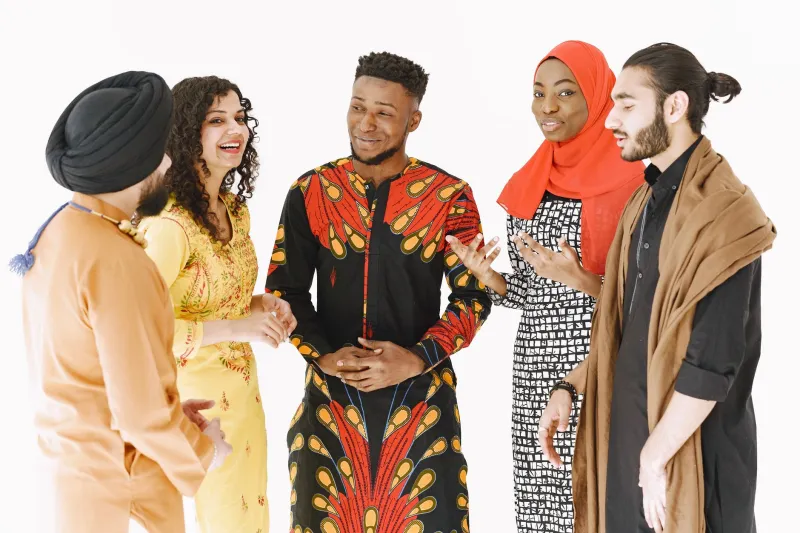
Photo: A Vahanvaty from Dubai, UAE, CC BY-SA 2.0, via Wikimedia Commons
Outfit Purgatory: The Exhausting Fashion Math of Dating Someone Who Won't Use the Word 'Boyfriend'
There is a special kind of psychological torment reserved for people who are seeing someone but cannot, under any circumstances, tell you what that means. You're not dating. You're not not dating. You're in that particular amber of modern romance where every text gets analyzed like a Supreme Court brief and every outfit decision carries the weight of a diplomatic summit.
 Photo: Supreme Court, via www.newyorkappellatelawyer.com
Your closet, blameless and full of perfectly good clothes, has somehow become collateral damage.
This is situationship dressing. It is exhausting, it is real, and absolutely no one is talking about it enough.
The Fundamental Problem With Ambiguous Romance and a Full Wardrobe
Regular dating has rules. A first date has a dress code — something that says I made an effort but I'm not unhinged about it. A committed relationship has a dress code — whatever you want, because the other person has already decided they like you. But the situationship? The situationship exists in a lawless fashion wilderness where every outfit is a statement you're not allowed to make.
Too casual says I don't care. Too polished says I care more than I've admitted. Too sexy says I'm trying to lock this down. Too comfortable says I've already assumed this is locked down. The margin for error is approximately the width of a single thread count, and you are out here threading a needle blindfolded.
The average situationship participant spends roughly forty-five minutes deciding what to wear to something that isn't technically a date, which is forty-five minutes more than they spend on anything that actually appears on their calendar.
Hang Three: The Outfit That Cannot Commit Either
The first two hangs — we don't call them dates, remember — have some natural momentum. You're still in the window where showing up looking genuinely put together reads as normal human behavior rather than intention. But by the third hang, the pressure crystallizes. You've now spent enough time together that your choices are being catalogued, consciously or not.
This is where the effortless but clearly deliberate outfit enters the picture. A great pair of jeans that you've owned long enough to look lived-in but still sit right. A top that works for literally any setting because the venue for this hang has not been confirmed. Shoes that can handle a bar, a walk, or a spontaneous change of plans, because spontaneous changes of plans are the official currency of situationship scheduling.
You are not dressing to impress. You are dressing to maintain plausible deniability about how much you are trying to impress. There is a difference, and it lives in the details.
The Overnight Bag: Fashion's Most Loaded Piece of Luggage
At some point, if the situationship has any momentum at all, you will face the overnight bag. And here is where situationship dressing reaches its philosophical peak, because the overnight bag is the single most revealing artifact in the entire ambiguous-relationship canon.
Pack too little and you're performing indifference you do not feel. Pack too much and you've essentially moved in emotionally, which is a conversation neither of you has agreed to have. The overnight bag for a situationship must contain: exactly enough to signal that you have your life together, nothing that implies you've thought about this too hard, at least one item that looks good in the morning because morning is when these things get decided, and absolutely zero evidence that you googled 'what to pack for a casual overnight.'
The ideal situationship overnight bag looks like you threw it together in four minutes. It took you forty.
The Group Hang Complication
Few things accelerate the outfit calculus faster than the group hang — that moment when the situationship invites you into their broader social orbit and you must now dress for them and for their friends forming an opinion of you simultaneously.
This is not a date outfit. This is a press tour. You need something that communicates I have my own thing going on while also communicating I am a delight to be around while also not communicating I dressed this carefully for a Tuesday, which means I'm invested, which means I've had conversations in my head that we haven't had out loud.
The group hang outfit is a negotiation between your actual personality and the version of yourself you'd like their entire friend group to report back on. It's a lot to ask of a blazer.
Practical Guidance for the Romantically Unclassified
Since your heart is already doing enough heavy lifting, here is some concrete wardrobe logic for navigating the situationship circuit without losing your mind in the process.
Build a rotation, not a strategy. Three or four outfits that genuinely work for you — that you feel good in, that fit, that require no internal monologue to justify — are worth more than a closet full of options you're auditioning for someone else's approval. The goal is to look like yourself, just a version of yourself that got enough sleep.
Stop dressing for the outcome you want. If you want to have a conversation about what this actually is, have the conversation. Your outfit cannot have it for you, no matter how good the jeans are. Fashion is a communication tool, but it is a blunt one, and the specific message I would like to know where this is going requires words.
The morning-after outfit matters more than the arrival outfit. Whatever you wear when you wake up in someone else's space, when the performance pressure of the night before has dissolved — that's the one that actually registers. Make sure it's something you'd choose for yourself.
Let the ambiguity have a budget. If you are buying new things specifically for this person who hasn't defined what they are to you, set a ceiling. Situationships have a well-documented tendency to resolve themselves in ways that leave you with a very nice top and a complicated emotional memory. Dress well. Spend wisely.
The Clothes Were Never the Problem
Here's the thing about situationship dressing that nobody says out loud: the outfit anxiety is rarely about the outfit. It's about the uncertainty. It's about wanting to control the one variable — how you look — when every other variable is being withheld from you by someone who uses the phrase I'm not really a labels person like it's a personality.
Your closet didn't create this situation. It's just where you're taking out the stress of it.
Dress well because you like dressing well. Wear the thing that makes you feel like yourself. And if the person on the other end of this ambiguous arrangement still can't figure out what they want after seeing you in that outfit — that's information, and it's more useful than anything you were going to find in your wardrobe anyway.