The Great Seasonal Swap Scam: Your 'Off-Season' Clothes Are Just Dying in a Box

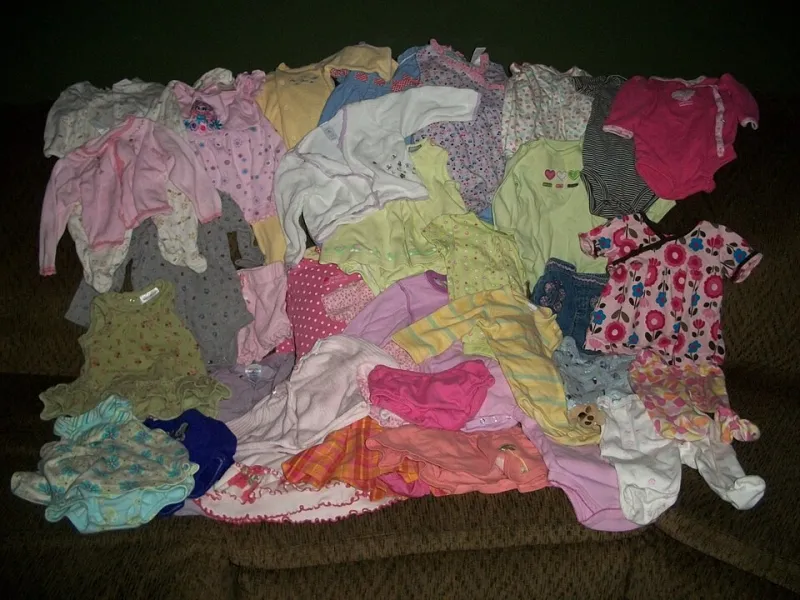
Photo: messy closet storage boxes seasonal clothes overflowing, via img.freepik.com
Somewhere in your home — under the bed, in a closet you've stopped making eye contact with, or stacked in a corner of the spare room that guests aren't allowed to see — there is a box. Maybe it's a plastic bin with a cracked lid. Maybe it's a vacuum-seal bag that stopped sealing sometime around 2021. Inside it: your "summer clothes." Your "winter clothes." Your "seasonal rotation."
They have been in there for fourteen months.
This is the great seasonal wardrobe swap lie, and it has been running its con on the American public for decades, aided and abetted by closet organization influencers, The Container Store, and every lifestyle magazine that has ever printed the phrase "capsule wardrobe transition tips."
The Promise vs. The Reality
The fantasy goes like this: twice a year, you — a calm, organized, aspirational version of yourself — perform a dignified wardrobe changeover. Summer items get freshly laundered, cedar-blocked, and stored with care. Winter items emerge crisp and ready. You feel refreshed. You feel like you have your life together. You sip coffee by a window while wearing a perfectly fitted transitional blazer.
The reality goes like this: it's October, you're cold, and you can't find your one good sweater because it's buried under four hoodies, a broken umbrella, and a pair of shorts you wore exactly once at a Fourth of July party where you got sunburned through them. The "summer box" got shoved somewhere in August and hasn't been touched since. You're wearing the same three pieces you've worn since March because at least you know where those are.
This is not a personal failure. This is physics.
Why Seasonal Storage Advice Is Built for Someone Who Doesn't Exist
Seasonal wardrobe rotation, as a concept, was designed for a very specific person: someone with a genuinely distinct summer and winter wardrobe, a home with adequate storage, the time and energy to launder everything before boxing it, and the organizational discipline of a mid-level military officer.
For the rest of us — people living in apartments where the "closet" is technically a hallway, people in climates where it's 75 degrees in November and then suddenly 40 degrees the next Tuesday, people who own forty-seven items and wear six of them — the rotation system is a beautiful lie we keep telling ourselves.
The seasonal storage industrial complex wants you to believe that your problem is a lack of the right bins. It is not. Your problem is that you own a linen sundress you've worn twice in three years and a parka that cost $280 and makes you feel like a minor celebrity every time you put it on. These items do not need rotating. They need a conversation.
The Guilt of the Unused Weather-Appropriate Garment
There is a specific, underrated emotional experience that comes with opening the seasonal box: the guilt spiral.
You pull out a pair of white linen pants — the ones you bought last April with genuine optimism — and you remember that you wore them exactly once, to a rooftop brunch, and spent the entire afternoon terrified of sitting on anything. They've been in a box for eight months. They have a mysterious crease across one knee. You don't know how that got there. You're not sure you want to know.
Or the swimsuit. The swimsuit you bought in a moment of summer confidence and wore to the pool twice before deciding you preferred sitting in air conditioning. It has been folded in a vacuum bag since Labor Day weekend, and looking at it now feels like finding a note from a more optimistic version of yourself.
This is the emotional tax of seasonal storage: every box is also a reckoning.
The Forty-Coat Problem
Here is a truth that seasonal rotation advice refuses to address: most people who own "too many winter clothes" don't have a storage problem. They have an acquisition problem.
You own seven coats. You wear two of them. The other five range from "almost perfect but slightly wrong" to "bought on sale, regret immediately, haven't returned." No amount of seasonal rotation is going to fix this. You can box up those five coats every spring and pull them out every fall, and they will still be wrong. They will always be wrong. They were wrong when you bought them. You just hadn't worn them enough to know it yet.
The same math applies to summer clothing. The linen blazer that looked incredible in the store and makes you sweat through immediately in actual outdoor conditions. The sandals that seemed comfortable during the three-minute try-on and destroyed your feet on every subsequent outing. The printed shorts that you bought because vacation optimism is a powerful narcotic.
Practical Alternatives to the Pinterest Closet Fantasy
So what do you actually do? Here, in descending order of effort required:
Option A: The Honest Purge. Before you box anything, ask yourself one question — not "do I love this?" because you can convince yourself you love almost anything — but "have I worn this in the last twelve months?" If the answer is no, it goes. Not to the box. Out.
Option B: The Climate-Appropriate Lie. If you live somewhere with genuinely mild winters, accept that you don't have a "winter wardrobe." You have a wardrobe. Stop boxing things seasonally and just... wear your clothes. Radical. Possibly life-changing.
Option C: The One-In-One-Out Rule. Before anything new enters your closet, something old leaves. This is the only system that actually works, and also the only one that requires no storage bins, no labels, and no cedar balls.
Option D: The Acceptance Protocol. Acknowledge that you wear the same core rotation of eight to twelve items regardless of the season, the rest of your wardrobe is emotional furniture, and you are going to stop pretending otherwise. Make peace with your actual self. She wears the same jeans four days a week and is thriving.
A Final Word on the Box
The seasonal wardrobe swap is not a bad idea. It works beautifully for people with the right homes, the right wardrobes, and the right amount of time. For everyone else, it is a semi-annual guilt ceremony dressed up as organization.
Your summer clothes are not in storage. They are kindling. They are the physical manifestation of who you thought you'd be when spring came around. And that's okay. Next year, maybe you'll wear the white linen pants. Maybe you'll be a person who rotates their wardrobe twice a year with military precision.
Or maybe you'll just wear the jeans.
Both are valid. Only one is honest.