Twice a Year, Your Closet Becomes a Crime Scene: A Survival Guide to the Seasonal Wardrobe Swap
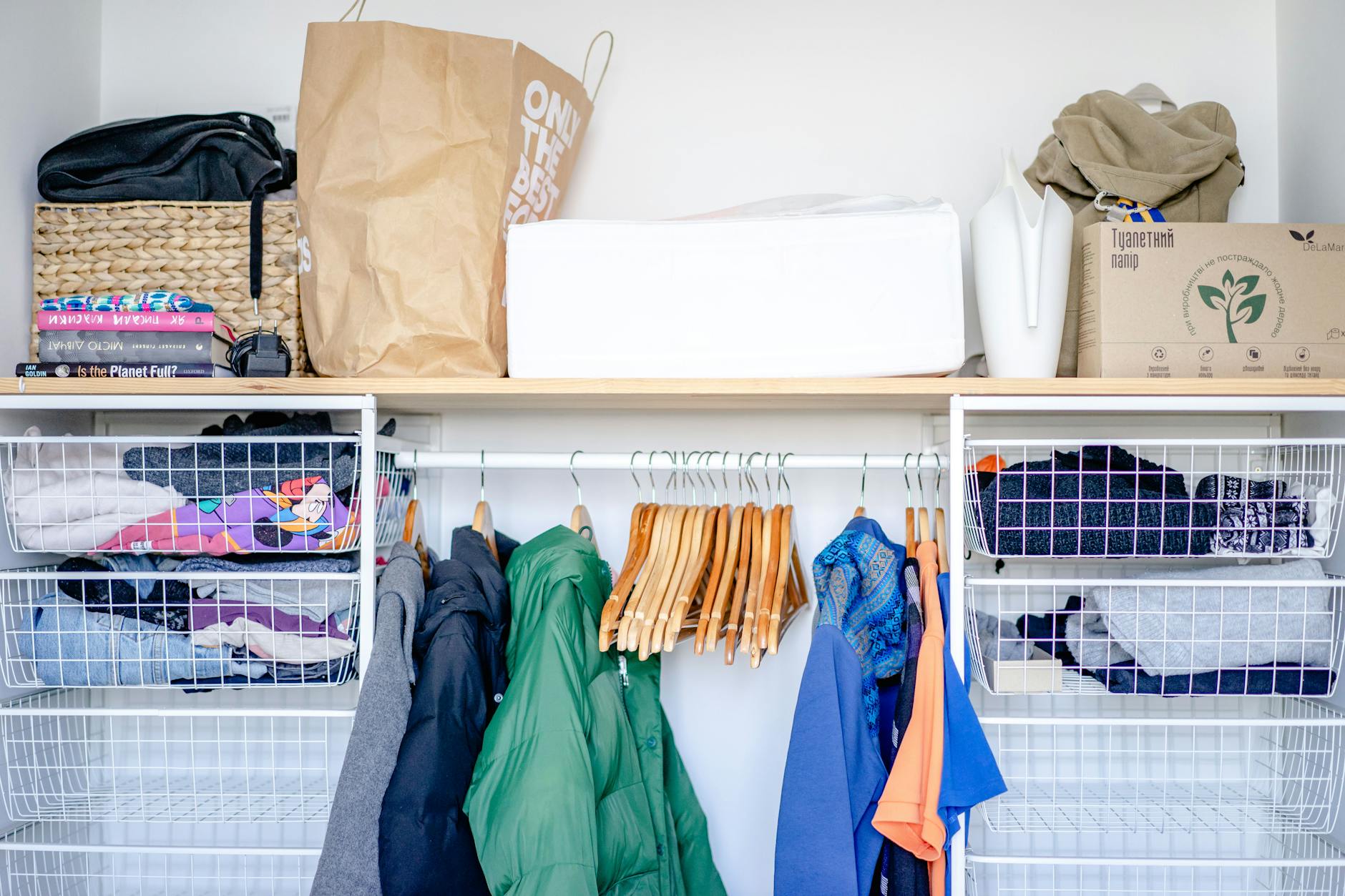
Twice a Year, Your Closet Becomes a Crime Scene: A Survival Guide to the Seasonal Wardrobe Swap
It happens twice a year, like clockwork, like taxes, like that one song that always seems to be playing in a grocery store when you're already running late. The temperature shifts in one direction or another, and suddenly the clothes hanging in your closet are no longer the clothes you need, and the clothes you need are in a bin somewhere under your bed, behind a suitcase you haven't opened since 2019, next to a box of things you keep meaning to deal with.
Welcome to the seasonal wardrobe swap. Population: everyone who owns more than one jacket.
This is not a fun process. We're not going to tell you it's fun. But it is survivable, and with the right approach, it can be something close to satisfying — the kind of satisfaction that comes from completing a task you've been avoiding for three weeks and discovering that you own a really great sweater you completely forgot about. That sweater is out there. We're going to help you find it.
Stage One: Acceptance (And Pulling Everything Out)
The first stage of the seasonal wardrobe swap is psychological. You need to accept, before you start, that it is going to look significantly worse before it looks better. This is not a sign that you're doing it wrong. This is just how it works. At some point in the process, your bed will be entirely covered in clothing, there will be things on the floor, and you will briefly consider just buying all new clothes and starting fresh. Do not do this. The sweater is in there somewhere.
Pull everything out. Not some things — everything. The stuff in the back of the closet that you've been pretending isn't there, the things folded on the high shelf that you need a step stool to reach, the items hanging behind other items like they're hiding. Get it all into the light.
This is important for two reasons. First, you can't make real decisions about what to keep and what to move to storage if you don't know what you actually have. Second, you will find things you forgot you owned, and the emotional journey of that discovery is genuinely part of the process.
The Five Emotional Stages of Rediscovering Forgotten Clothes
You will experience all of these. We promise.
1. Confused Recognition — Wait, do I own this? Yes. You do. You bought it eighteen months ago and wore it once and then it migrated to the back of the closet, which is where clothes go when they're not quite right but you're not ready to admit it.
2. Optimistic Reappraisal — Actually, this is kind of great. You hold it up. You consider it with fresh eyes. You remember why you bought it. This is a genuine second chance for some items.
3. The Honest Reckoning — Why did I buy this? This is the question that haunts every wardrobe swap. The answer, usually, is that it was on sale, or you were in a weird mood, or you convinced yourself you'd wear it more than you have. This is not a judgment. This is just the truth.
4. The Phantom Memory — I've been looking for this. The item you forgot you owned but have been mentally searching for every time you got dressed. This is the best part of the entire process. This is the sweater.
5. The Donation Clarity — I am never wearing this. After the optimistic reappraisal phase, some items will reveal themselves as genuinely, permanently unwearable-by-you. Not bad clothes, just not your clothes anymore. Let them go. They have a life ahead of them at Goodwill.
The Actual System (Yes, You Need a System)
Once everything is out and you've completed your emotional journey, it's time to sort. Here's a framework that actually works:
The Keep Pile: Things you wore regularly last season and will wear again. These go back in the closet or into storage, depending on the season. No deliberation needed.
The Try-On Pile: Things you haven't worn in a while but aren't ready to release. Try them on, right now, while you're doing this. Don't defer it. If it fits well and you feel good in it, it earns its place. If you're making excuses for it, it moves to the next pile.
The Donate/Sell Pile: Things that no longer fit, things you haven't worn in over a year, things you bought in the optimistic reappraisal phase of a previous wardrobe swap and still haven't worn. ThredUp, Poshmark, and your local Goodwill are all valid destinations. One person's abandoned impulse purchase is another person's great find.
The Repair Pile: The button that needs replacing, the hem that needs fixing, the zipper that's been broken for two seasons. This pile exists with one condition: you must set a deadline for actually doing the repairs. Two weeks. If it's not fixed in two weeks, it moves to the donate pile. Clothes that need fixing but never get fixed are just guilt with a hanger.
Storage Without Losing Your Mind
A few genuinely useful notes on the mechanics of storing off-season clothes:
Vacuum storage bags are legitimately useful for bulky items — sweaters, down jackets, heavy blankets — but not for delicate fabrics that need to breathe. Use them strategically, not universally.
Label everything. This sounds obvious and yet. A label that says Winter Sweaters on the outside of a storage bin is the difference between a smooth swap next season and standing in your bedroom at 9pm in October trying to find a specific cardigan.
Don't store things that need to be cleaned. Moths are drawn to body oils and food residue on fabric. Everything going into storage should be clean. This is the rule that is most frequently skipped and most frequently regretted.
If you have the space, leaving a few transitional pieces accessible — a medium-weight jacket, a couple of layering pieces — saves you from the thing where it's 55 degrees in early October and all your fall clothes are technically still in storage.
The Part Where We're Honest With You
Here's what nobody tells you about the seasonal wardrobe swap: the reason it's overwhelming isn't just the volume of stuff. It's that every item in your closet is a small decision you made at some point, and revisiting all of them at once is a lot. It's okay if it takes a full afternoon. It's okay if you need to stop and eat something in the middle. It's okay if you find the process more emotionally complicated than you expected.
But here's the other thing: there is a version of your closet on the other side of this process that only contains things you actually like, that actually fit, that you'll actually reach for. That closet is worth the afternoon. And somewhere in that closet, there's a great sweater you forgot you owned, and finding it is genuinely one of the small pleasures of having a wardrobe at all.
Go find your sweater.