The Thrill of the Find: How Hunting Clearance Racks Became America's Coolest Hobby

Photo: woman excited shopping discount store clearance rack holding price tag, via thumbs.dreamstime.com
The Thrill of the Find: How Hunting Clearance Racks Became America's Coolest Hobby
There is a specific kind of joy that cannot be manufactured, bottled, or replicated by any full-price retail experience. It arrives in a fluorescent-lit aisle, somewhere between the slightly disorganized shoe section and the rack of mystery blazers, when your fingers close around a tag and the number on it is so aggressively low that you have to check it twice. Sometimes three times. Then you look around to see if anyone else saw what you just saw, because this is your find, and the territorial instincts are real.
This is the dopamine hit of the discount haul. And somewhere along the way, America stopped being embarrassed about it and started building a whole identity around it.
From Budget Necessity to Badge of Honor
For a long time, discount shopping carried a quiet stigma in fashion-adjacent circles. You bought things on clearance because you had to, and you didn't necessarily lead with that information at dinner. The aspirational fashion economy ran on the premise that paying full price — or, ideally, paying an amount that made you briefly reconsider your life choices — was part of the experience. The price tag was the point.
Then something cracked. Maybe it was the 2008 recession, which sent a generation of style-conscious Americans into TJ Maxx and never quite let them leave. Maybe it was the rise of resale culture, which reframed the hunt as a skill rather than a compromise. Maybe it was the internet, which gave every bargain hunter a platform to document their victories and an audience genuinely excited to hear about them.
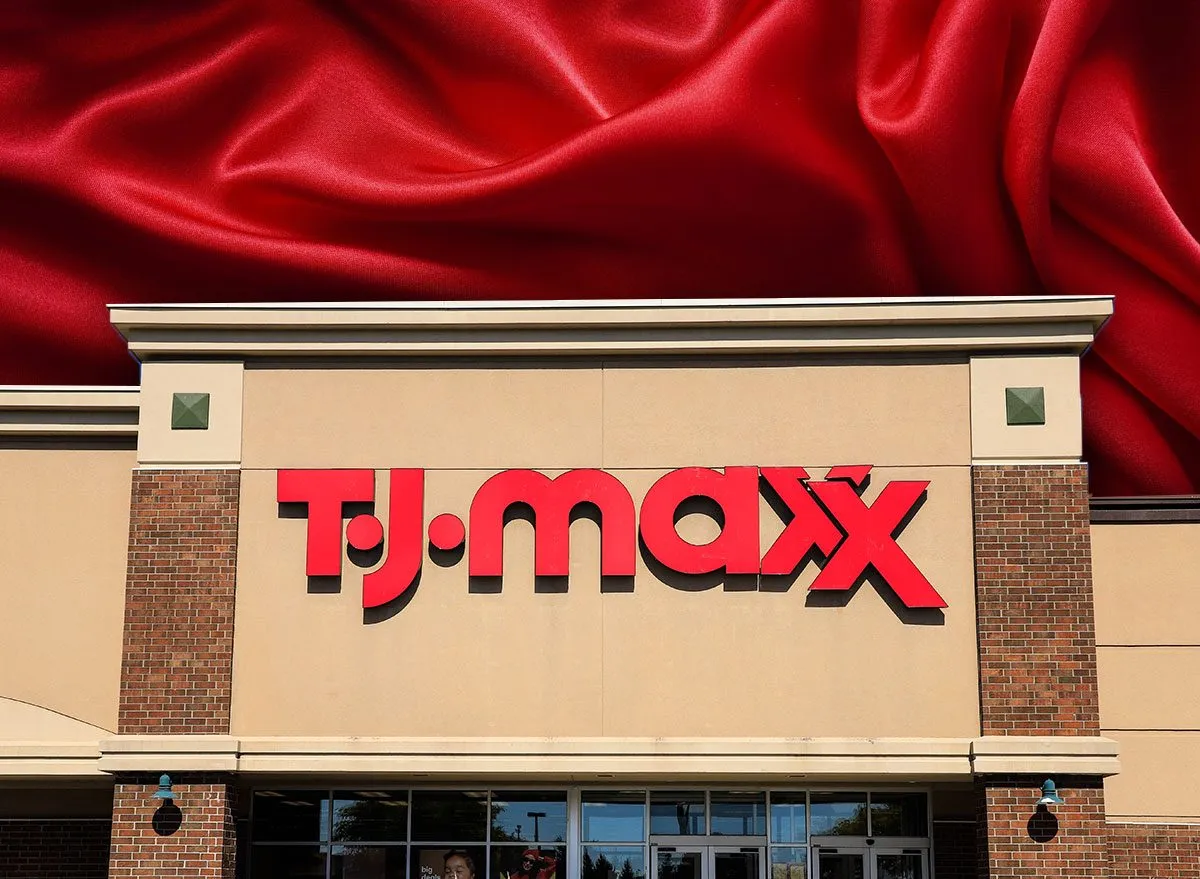 Photo: TJ Maxx, via bestlifeonline.com
Whatever the cause, the effect is undeniable: the clearance haul has been fully rehabilitated. 'I found this at Marshalls for eleven dollars' is now delivered with the energy of someone announcing they got early access to a sold-out drop. The markdown is the flex. The find is the status symbol.
The Unspoken Rules of the Serious Bargain Hunter
Make no mistake — there is craft involved here. The casual shopper who wanders into a HomeGoods for a candle and leaves forty-five minutes later with two throw pillows and a pasta bowl set is a civilian. The serious bargain hunter is something else entirely.
They have a system. They know which days new inventory tends to hit the floor at their local TJ Maxx (Tuesday and Thursday, for the uninitiated, though your location may vary and this knowledge is treated like a trade secret). They understand that the clearance section requires patience, physical commitment, and the willingness to move every single item on a rack because the good stuff is always behind three things you don't want.
They also know the cardinal rule: you do not buy something just because it is cheap. This is the trap that catches civilians. The experienced bargain hunter has a strict internal filter — would I want this at full price? Would I buy this if it cost $80? If the answer is no, it goes back on the rack, no matter how aggressively the tag has been marked down. The discount is a bonus, not the reason.
Violate this rule and you end up with what every seasoned thrift-and-discount veteran has in their closet: the mistake pile. The things that seemed like a victory in the store and revealed themselves as disasters at home. The slightly-too-small blazer. The dress in a print that made sense under fluorescent lights and makes no sense anywhere else. The shoes that were $9 and are worth exactly that. We've all been there. We don't talk about it. We move on.
The Social Media Haul Economy
The clearance aesthetic found its natural home on TikTok and Instagram, where the haul video — once the domain of fast fashion try-ons — has been thoroughly colonized by the discount devotee. The format is simple: here is what I bought, here is what I paid, watch me die of happiness about it.
These videos perform extraordinarily well, and for good reason. They deliver two things simultaneously: the vicarious thrill of the find, and the deeply satisfying math of 'this person got significantly more than I did for significantly less money.' It's aspirational content with a democratic edge. You don't need a luxury budget to participate. You need patience, a flexible schedule, and the ability to communicate genuine excitement about a $16 linen blazer that retailed for $95.
The comment sections on these videos are their own cultural artifact. 'Which location is this' appears roughly every four comments. People share their own finds in reply. Regional rivalries emerge over which city has the best TJ Maxx, a debate conducted with the seriousness of a geopolitical dispute. There are inside jokes, recurring characters, and a whole vocabulary — 'the rack gods delivered,' 'the tag said what,' 'I blacked out and now I own this' — that signals membership in the community.
The Coexistence Paradox
Here is the genuinely interesting cultural tension at the center of all this: the discount aesthetic doesn't exist in opposition to aspirational fashion. It exists alongside it, in the same closet, sometimes on the same person, often on the same Instagram grid.
The serious bargain hunter will spend $14 on a TJ Maxx score and $200 on a single piece they've wanted for months without experiencing any cognitive dissonance about it. The logic is internally consistent: I saved enough on fifteen other things that this one investment piece is basically free, a calculation that does not hold up to scrutiny but feels completely correct.
This is actually a more sophisticated relationship with fashion than either pure luxury consumption or pure budget shopping. It requires knowing what you actually want, what you'll actually wear, and where you're willing to compromise versus where you refuse to. That's not a budget mentality. That's just good taste with a strategic framework.
The Ritual Is the Point
What discount fashion culture really runs on, underneath the savings and the social content and the competitive sport of it, is the ritual. The weekend TJ Maxx run is not purely a shopping errand. It is an experience — unpredictable, tactile, occasionally triumphant, occasionally humbling. You do not know what you will find. You might find nothing. You might find the best thing you've ever owned for $22. The uncertainty is the entire appeal.
Full-price retail, for all its curated beauty, cannot offer this. The algorithm has already decided what you want. The merchandising has already told you how to feel about it. The price is the price. There is no hunt. There is no find. There is just a transaction.
The clearance rack gives you back the discovery. And in a shopping landscape that has optimized almost everything else into predictability, that turns out to be worth quite a lot.
Even if the blazer doesn't quite fit. You'll make it work.